Sunday, 24 January 2016

WHAT HAPPENED TO THE SPANISH EMPIRE DURING THE 19TH CENTURY?

At the start of the 19th century, Spain controlled most of Central and South America, as well as the Philippines in Asia. But by the end of the century, Spain had lost its last colonies.
Between 1810 and 1825 most of Spain’s colonies became independent, for two reasons:
• The colonists were influenced by the French Revolution. They wanted more rights and freedom from Spanish control.
• Spain was busy fighting against the French people, so its control over the colonies was weaker. The colonies won their independence.
Haiti became independent in 1804. Argentina and Colombia in 1810. Paraguay and Venezuela in 1811. Chile in 1818. Mexico, Guatemala, El Salvador, Honduras, Nicaragua, Costa Rica and Peru in 1821. Ecuador in 1822. Bolivia in 1825. Uruguay in 1828. Dominican Republic in 1844. And, finally, Cuba, Puerto Rico and Philippines in 1902.
SpanishEmpire1790
Spanish Empire at its greatest extent (1790). By Nagihuin (Own work) [CC BY-SA 4.0 (http://creativecommons.org/licenses/by-sa/4.0)], via Wikimedia Commons
Spain in 1898
Spain in 1898. By Xaverius (Own work) [CC BY-SA 3.0 (http://creativecommons.org/licenses/by-sa/3.0)], via Wikimedia Commons

THE CARLISTS WARS

At this time only males could inherit the throne. Fernando VII and his wife, María Cristina had a daughter, Isabel, but they didn´t have any sons. So, Fernando’s brother, Carlos would be the next king. Fernando VII changed the law so that Isabel could be queen. Fernando died in 1833. Isabel was three years old. Her mother, María Cristina, ruled until Isabel was 18. This caused a series of conflicts named the Carlist Wars:
• The liberals supported Maria Cristina and Isabel II. The liberals supported the ideas of the French Revolution and the Constitution of Cádiz (economic reforms and less power to the monarchy and the Catholic Church).
• The Carlists (conservatives) supported Carlos (Fernando’s VII brother). They wanted a powerful Catholic Church and an absolute monarchy.
The First Carlist War began in 1833 and ended in 1839. The liberals won. The Second Carlist War began in 1846 and ended in 1849. The Third Carlist War began in 1872 and ended in 1876. The liberals won the three of them.
María Cristina, by Vicente López y Portaña [Public domain], via Wikimedia Commons.
Isabel II niña. By Carlos Luis de Ribera y Fieve [Public domain], via Wikimedia Commons
Isabell II queen of Spain. See page for author [Public domain], via Wikimedia Commons.
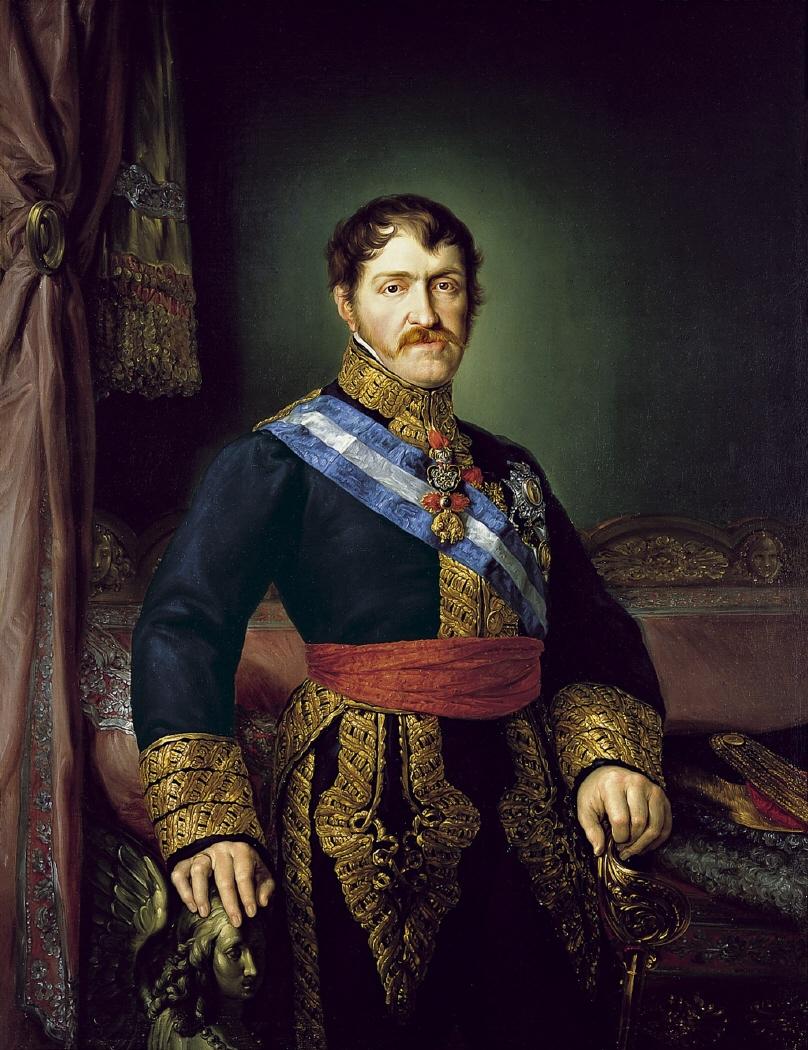
Carlos María Isidro De Borbón, Fernando VII's brother. Vicente López y Portaña [Public domain], via Wikimedia Commons.

THE SPANISH WAR OF INDEPENDENCE

The French army was occupying Spain. On 2 May 1808 there was a revolt in Madrid against the French. This was the beginning of the Spanish War of IndependenceThe war ended in 1814.
Scene from Spanish War of Independence, by Goya. By Yelkrokoyade (Own work) [GFDL (http://www.gnu.org/copyleft/fdl.html) or CC BY-SA 3.0 (http://creativecommons.org/licenses/by-sa/3.0)], via Wikimedia Commons.
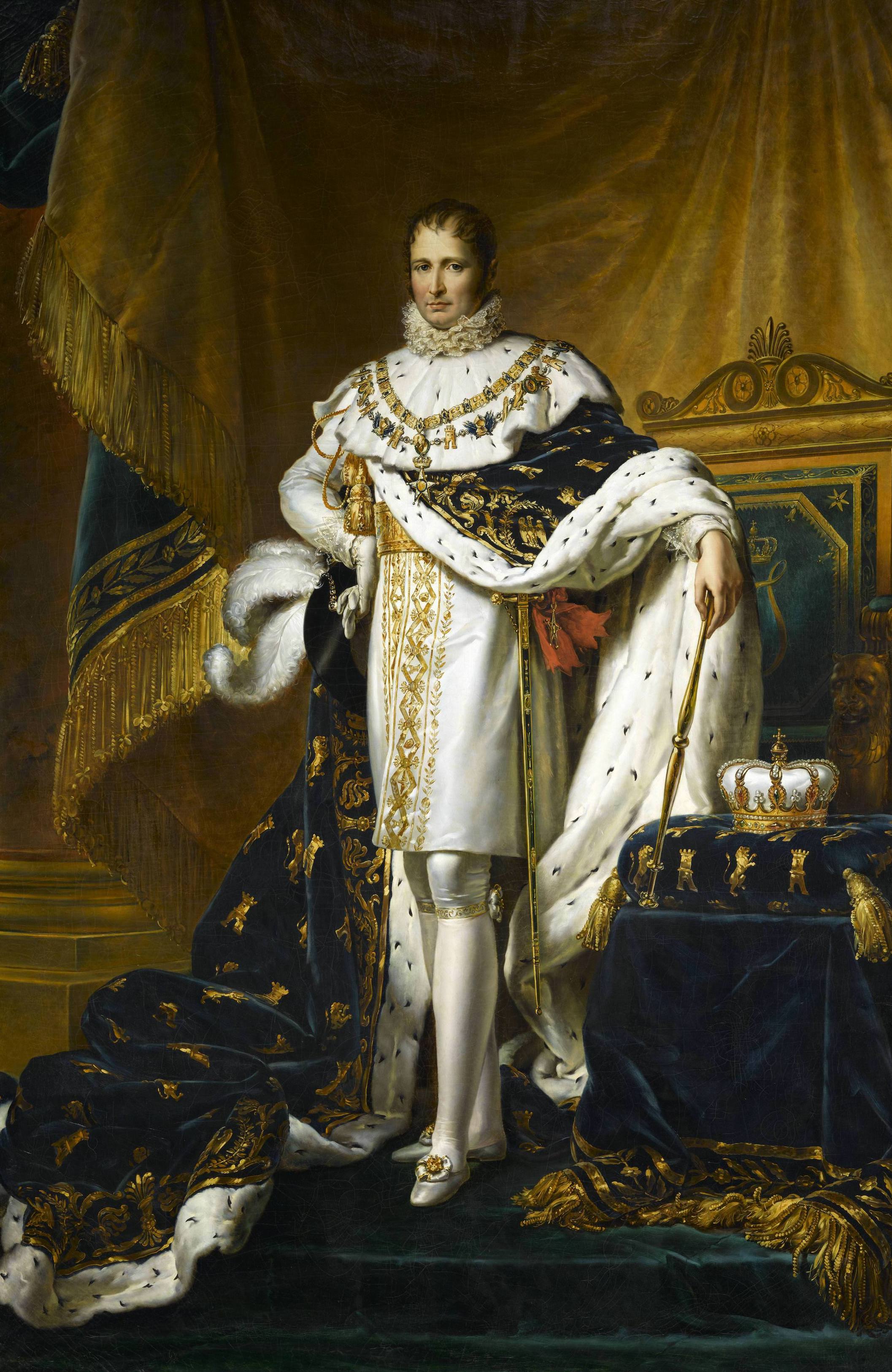
The Spanish people fought a guerrilla war against the French army. The French army soon controlled most of Spain. Spain had two governments. A French government in Madrid, headed by Napoleon’s brother, Joseph I (Pepe Botella). 
Joseph Bonaparte. Photo by François Gérard [Public domain], via Wikimedia Commons.
And a Spanish government in Cádiz headed by Fernando VII (Carlos IV’s son).
Fernando VII by Goya. Via Wikimedia Commons.
In 1812 the Spanish government in Cádiz approved a new Constitution, called the Constitution of Cádiz (la Pepa). It was Spain’s first liberal constitution:
• The power of the monarchy was reduced.
• Ordinary people could vote in elections (only men).
• Government was separated into three branches: legislative, executive and judicial.
• Freedom of press was established.
• The Spanish Inquisition was abolished.
Constitution of Cadiz, known as "La Pepa". Photo voa Wikimedia Commons.
Spain defeated the French army in 1814 and Fernando VII returned to power. He abolished the Constitution of Cádiz and restored the absolute monarchy.

THE MODERN AGE

The Modern Age starts with the French Revolution, in 1789The French people rebelled against their king, Louis XVI.
Louis XVI by Antoine-François Callet. From Wikimedia Commons.
Europe was in crisis. Louis XVI, the French king, ruled as an absolute monarch, he had all power. There were great inequalities between the nobility and the ordinary people (who were extremely poor).
On 14 July 1789 the people of Paris attacked the Bastille prison. The revolt spread from Paris to other parts of France. The king was killed in 1793 and the monarchy was abolished.
As a result of the revolution, France became a republic:
• Power was separated into three branches: legislativeexecutive and judicial.
• The law recognized all citizens as equal (no privileges for the nobility).
• Ordinary people could vote in elections (only men).
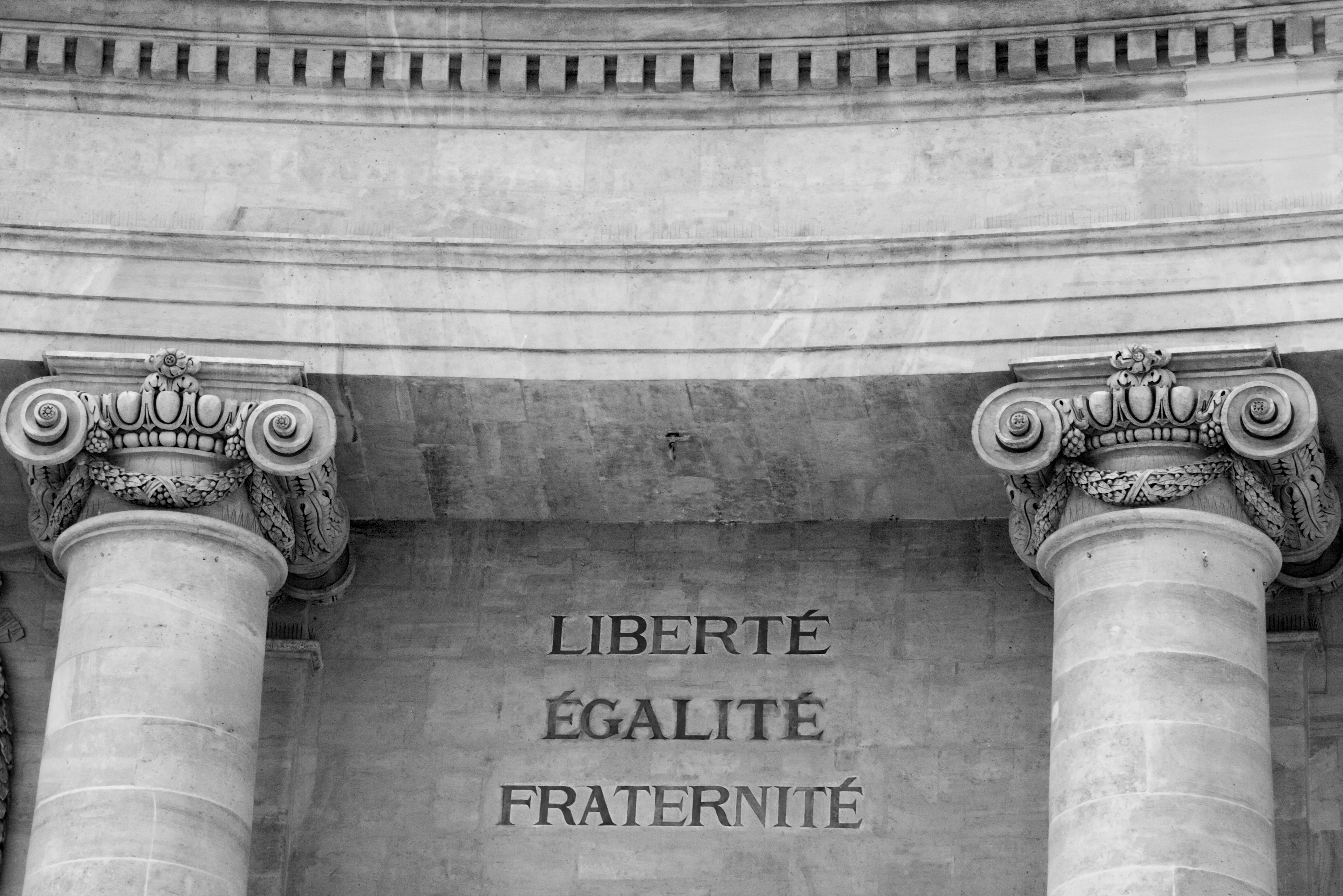
The central ideas of the French Revolution were liberty, equality and fraternity.
Photo by Meryabad.
During the French Revolution Napoleon Bonaparte was a military commander. He became Emperor of France in 1804. He wanted to establish a big empire conquering other European countries.
Napoleon Bonaparte. By Halldór Axel (Own work) via Wikimedia Commons.
Spain was ruled by Carlos IV, but Manuel de Godoy, his prime minister, was really in control. In 1807 Napoleon and Godoy signed the Treaty of Fontainebleau. This allowed the French army to cross Spain to conquer Portugal. When the French army was in Spain, Napoleon decided to conquer Spain.
Carlos IV by Goya. Via Wikimedia Commons.
Manuel De Godoy by Agustín Esteve y Marqués. Via Wikimedia Commons.

Monday, 23 November 2015

EUROPE'S COASTLINE

Europe is made up of many peninsulas, thousands of islands, capes, fjords and rias.
The main southern peninsulas are the Iberian Peninsula, the Italian Peninsula, the Balkan Peninsula, the Peloponnese Peninsula and the Crimean Peninsula. In the north, the Scandinavian Peninsula.
Some of Europe's islands are countries: Iceland, Ireland, Cyprus and Malta. Others are part of countries: Balearic Islands and the Canary Islands in Spain and the Azores and Madira in Portugal. Greenland (Denmark) is Europe's largest island.

Capes are large areas of land which protrude into the sea. Some of the important capes in Europe are Capes San Vicente and Roca in Portugal, Fisterra and Cabo de Gata in Spain, North Cape in Norway, Cape Matapan in Greece and Land's End in the United Kingdom.

Fjords are inlets in the coast formed by glaciers. The coasts of Norway and Greenland have many fjords.

Rias are river valleys flooded by rising sea levels. The best-known rias are on the coast of Galicia.


http://www.educaplay.com/es/recursoseducativos/2189065/europe_s_coastline.htm


Monday, 16 November 2015

BLOOD: CIRCULATORY SYSTEM III

Our blood contains three types of cells:
  1. Red blood cells absorb oxygen in the lungs and transport it to the organs and muscles.
  2. White blood cells fight germs and infections in our body. They attack infected cells.
  3. Platelets help to stop bleeding. When you have a cut that's bleeding, platelets stick to the edges of the cut and to each other. In this way, they cover the cut and form a scab, and this stops the bleeding.


BLOOD VESSELS: CIRCULATORY SYSTEM II

The blood vessels are tubes that connect the heart to the rest of the body.
There are three types of blood vessels: arteries, veins and capillaries.
  1. Arteries are large blood vessels that carry blood from your heart to the rest of your body. This blood is rich in oxygen and nutrients. As arteries get farther away from the heart they begin to branch and become smaller and smaller. The smallest branches are called capillaries.
  2. Capillaries: this is where the oxygen of your blood is transferred to your tissues. In exchange, the wastes from your cells are transferred to the blood, including the carbon dioxide. Just beyond this area the capillaries begin to merge together and eventually form larger vessels called veins.
  3. Veins lead back to the heart. As the vessels carry deoxygenated blood back to the heart, waste products are routed to other organs where they are removed.