When the circuit is closed and the current flows through the circuit, it produces a magnetic field in the electromagnet. The hammer is attracted to the elctromagnet and hits the bell. The movement of the hammer breaks the circuit and the hammer returns to its original position. Then the cycle begins again.
MAGLEV
A magnetic levitation train uses electromagnets to levitate above its track.
The maglev has electromagnets in the base of the train.
The tracks have magnets which repel the electromagnets in the train.
The magnets above and in front of the train attract the magnets in the train, causing the train to move forward.
SPEAKERS AND MICROPHONES
Electric current travels through the coil of wire. This creates a magnetic field that switches on and off rapidly.
The magnetic field attracts the magnet, which is attached to the cone.
The cone vibrates rapidly, producing sound waves.
THERMAL ENERGY
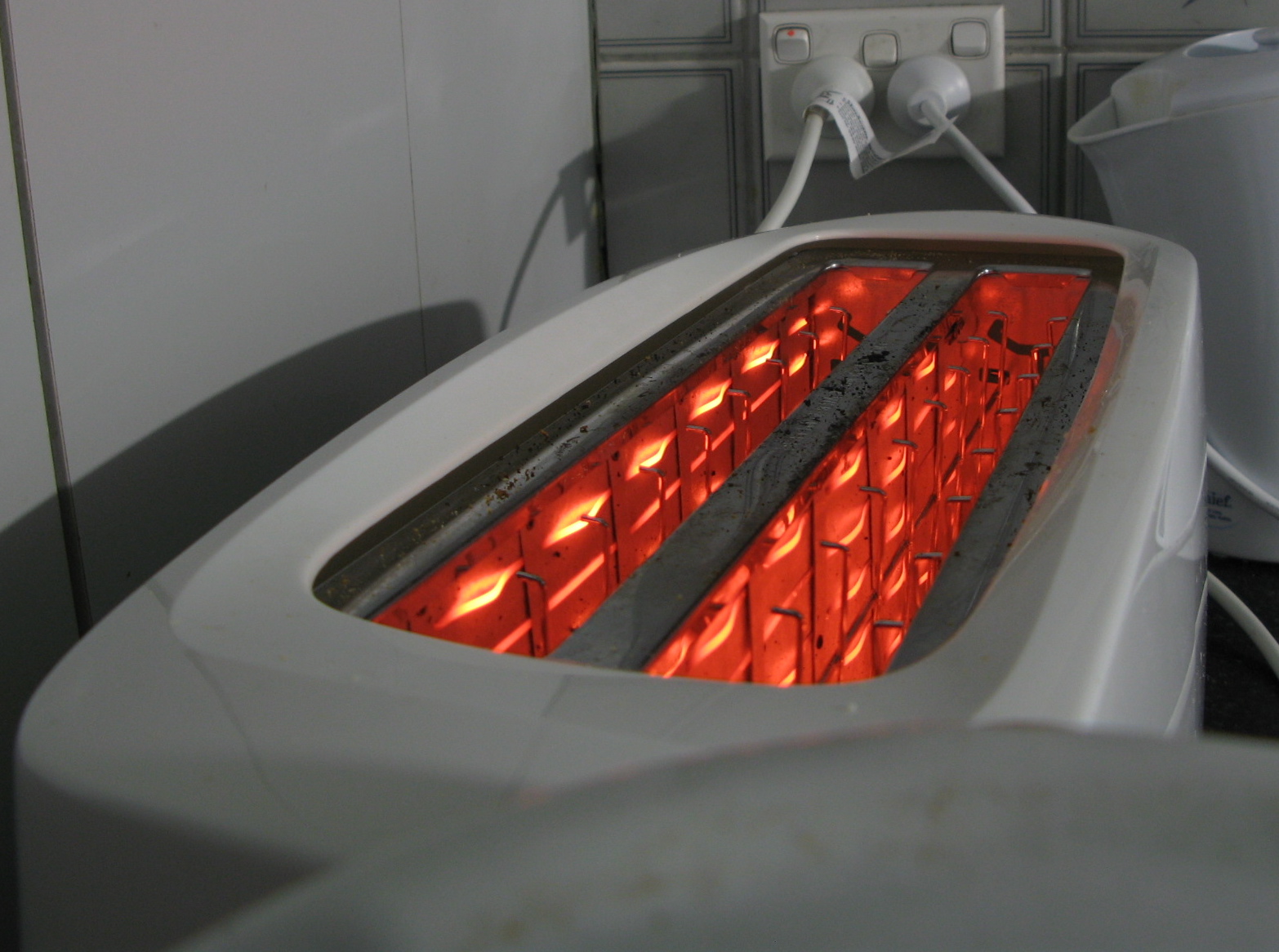
The electric current produces a little thermal energy as it travels through a wire, but it produces a lot of thermal energy travelling through other substances (in an oven...).
A toaster uses thermal energy from electricity. Nick carson at en.wikipedia [CC BY 3.0 (http://creativecommons.org/licenses/by/3.0)], via Wikimedia Commons
CHEMICAL REACTIONS
Electrolysis is a chemical reaction produced when an electric current flows through a liquid solution of charged particles. We us elctrolysis in electroplating: coating a metal object with a thin layer of another metal.
The Earth has a magnetic field called the magnetosphere. It extends from the South Pole to the North Pole (it's as if the earth had a bar magnet in its centre). The North Pole is the South Pole of the Earth's magnetosphere.
Magnetosphere. By NASA (http://sec.gsfc.nasa.gov/popscise.jpg) [Public domain], via Wikimedia Commons
WHAT CAUSES THE MAGNETOSPHERE?
The centre of the Earth is made of liquid iron. This liquid moves slowly as the Earth rotates causing a magnetic field to form around the whole planet.
USING A COMPASS
A compass has a magnetised steel needle that is balanced inside a container. The north pole of the needle is painted red. It is attracted to the south pole of the magnetosphere: the magnetic north pole of the Earth. It will always point north.
Compass. By Evan-Amos (Own work) [Public domain], via Wikimedia Commons
WHY IS THE MAGNETOSPHERE IMPORTANT?
It deflects solar radiation from the Sun back into space. Radiation is harmful for plant and animal life on Earth.
It also helps us to navigate using a compass.
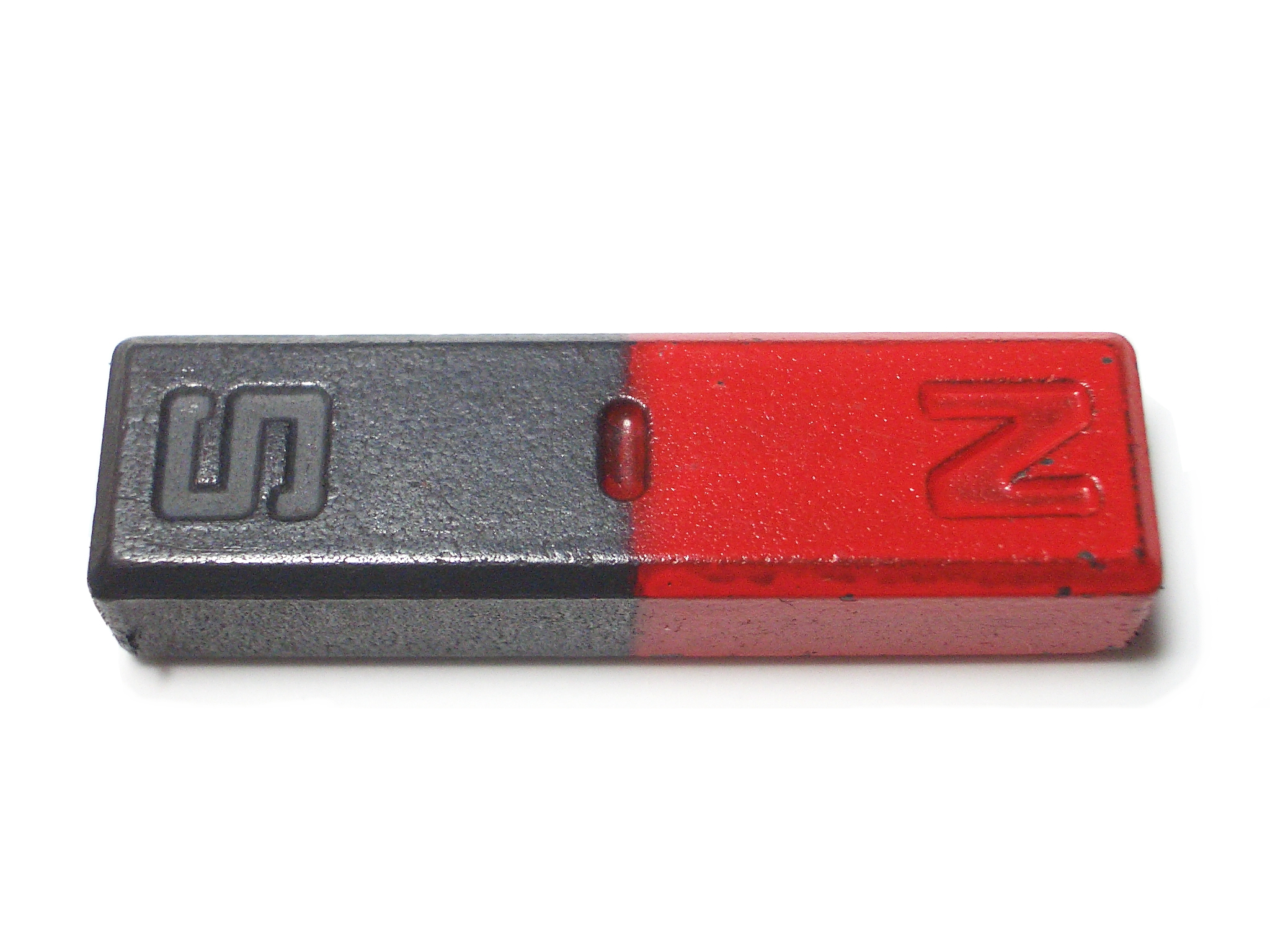
Bar magnets are permanent magnets, they can't be switched on and off, they always have a magnetic field. They have two poles: north (positively charged) and south (negatively charged). They attract metals such as iron, steel, cobalt and nickel. They also attract and repel other magnets.
Bar magnet. Photo taken by Aney, 2006-03-12, GFDL via Wikimedia
WHAT DOES A MAGNETIC FIELD LOOK LIKE?
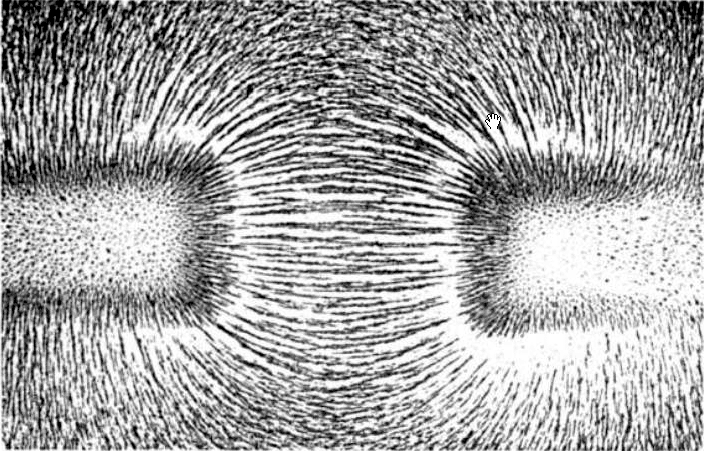
We can see the magnetic field of a bar magnet using iron filings.
By Alexander Wilmer Duff [Public domain], via Wikimedia Commons
HOW DO WE REPRESENT MAGNETIC FIELDS?
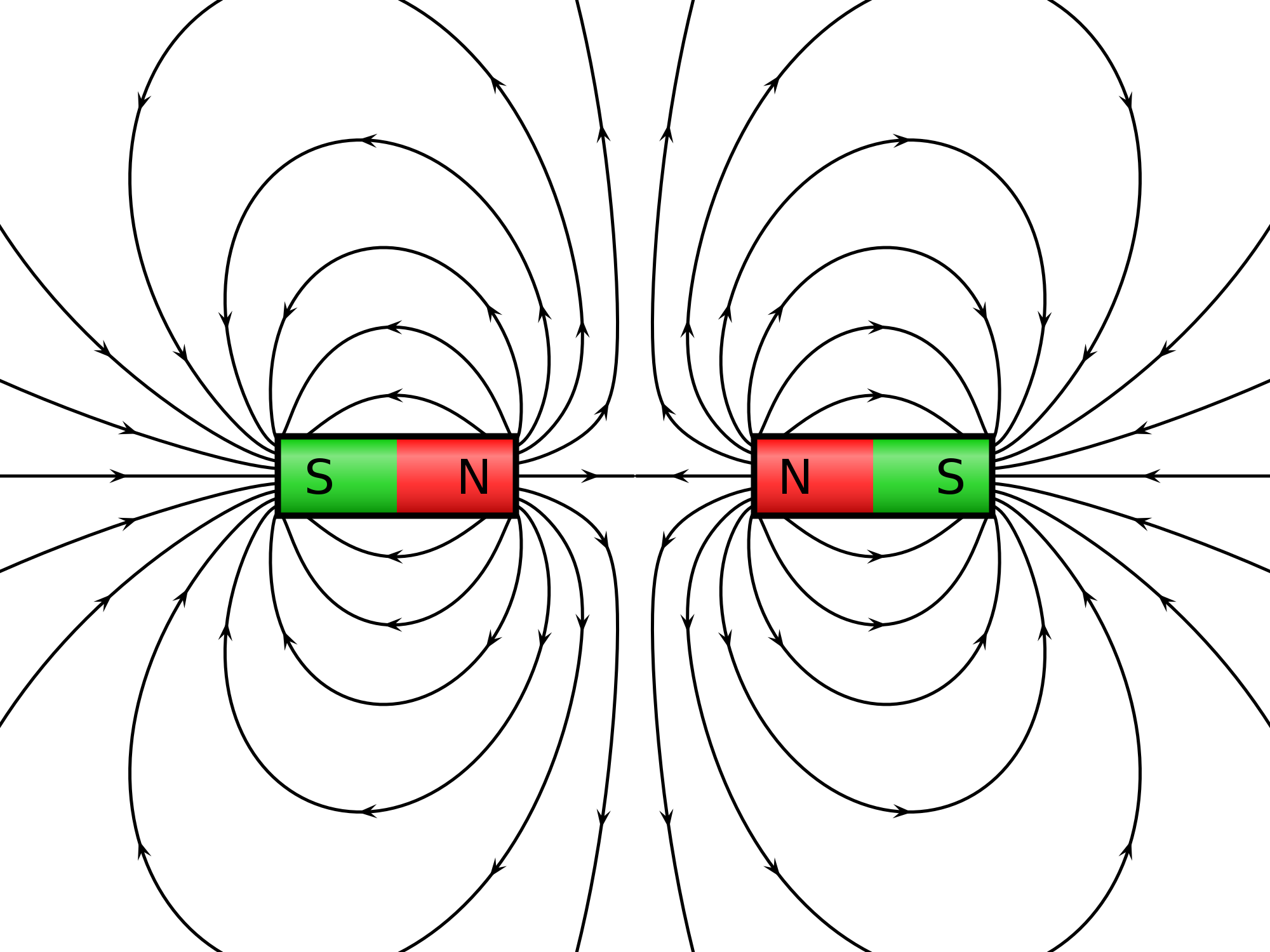
We draw lines from the north pole to the south pole of the magnet. There are more lines and they're closer together near the poles because the magnetic field is stronger there.
WHAT HAPPENS WHEN TWO MAGNETS ATTRACT OR REPEL EACH OTHER?
Look at the pictures:
Two magnets repelling. By Geek3 [GFDL (http://www.gnu.org/copyleft/fdl.html) or CC BY-SA 3.0 (http://creativecommons.org/licenses/by-sa/3.0)], via Wikimedia Commons
Two magnets attracting. By Geek3 [GFDL (http://www.gnu.org/copyleft/fdl.html) or CC BY-SA 3.0 (http://creativecommons.org/licenses/by-sa/3.0)], via Wikimedia Commons
HOW CAN WE IDENTIFY A MAGNET?
Magnets repel other magnets, but they don´t repel other substances.
Hans Christian Oersted discovered that electric current produces a magnetic force. Oersted saw that an electric circuit switched on made the compass needle move, but he couldn't explain the phenomenon.
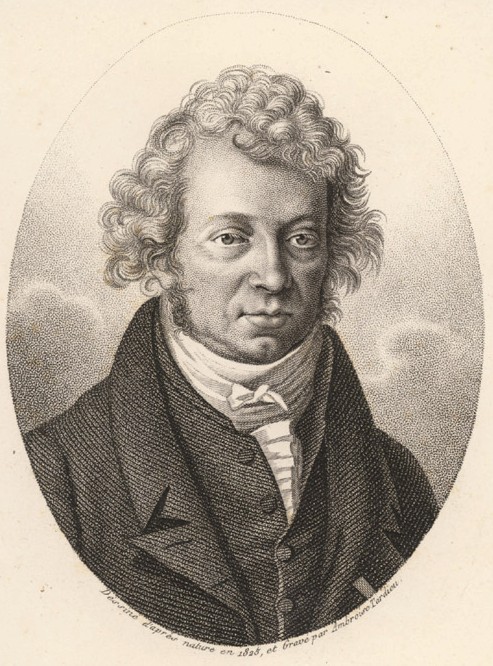
André-Marie Ampere decided to study that phenomenon. He discovered the electron, which produces both, electricity and magnetism. But he named it the 'electrodynamic molecule'. Later, other scientists named it the electron.
By Ambrose Tardieu [Public domain], via Wikimedia Commons
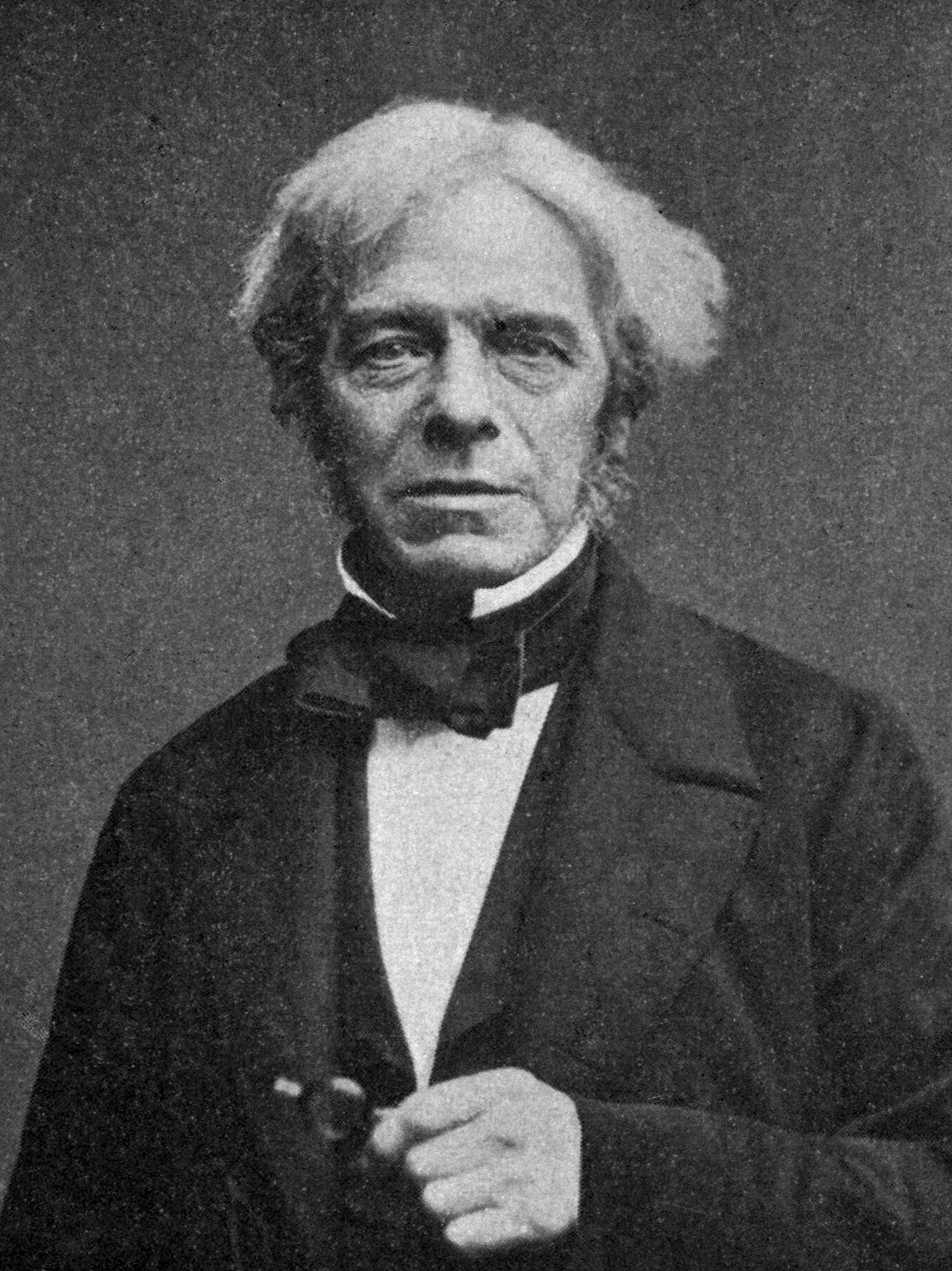
Michael Faraday discovered that by moving a loop of wire over a magnet, an electric current was produced in the wire. He invented the 'electromagnetic rotary device', the basis for the first electric motor or dynamo.
By Probably albumen carte-de-visite by John Watkins [Public domain], via Wikimedia Commons
Faraday Disk Generator. By Émile Alglave [Public domain], via Wikimedia Commons
SEPARATING MIXTURES WITH MAGNETS
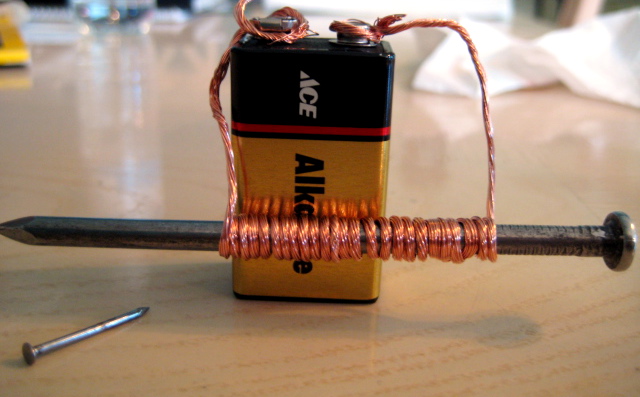
Electromagnets are made from a wire coiled around an iron rod. The wire is connected to a power source. When the electric current flows along the wire a magnetic field is generated. When you stop the circuit, the electromagnet is switched off. Electromagnets are used in recycling plants to separate iron and steel from plastic, glass or other metals.
Homemade electromagnet. By Gina Clifford (cobalt_grrl on Flickr) [GFDL (http://www.gnu.org/copyleft/fdl.html) or CC BY-SA 4.0-3.0-2.5-2.0-1.0 (http://creativecommons.org/licenses/by-sa/4.0-3.0-2.5-2.0-1.0)], via Wikimedia Commons
Oxidation is a chemical reaction in which an atom loses one or more electrons to oxygen atoms. Oxidation causes changes to the properties and appearance of substances.
Types of oxydation: Rusting: When iron is exposed to oxygen in the air, its electrons are lost. Rusting can cause problems in vehicles. To prevent this, vehicles are painted.
Oxidation in fruit: When the fruit is exposed to the air, its electrons are lost. When this happens, a chemical change takes place, and the part of the fruit that has oxidised is no longer good to eat.
Fermentation: is a chemical reaction in which an organism such as yeast or bacteria, changes sugar and carbohydrates into alcohol or an acid.
The process in which two or more substances combine chemically is called a chemical reaction.
Some chemical reactions produce thermal energy; these are called exothermic reactions.
Other reactions absorb thermal energy; these are called endothermic reactions.
Combustion, or burning, is the name for a chemical reaction in which oxygen combines with a fuel, such as wood, coal or natural gas. It is an exothermic reaction. We use combustion in various ways:
Petrol and diesel are burnt to power vehicles and to heat homes.
Coal is burnt in power stations to generate electricity.
We burn natural gas to cook and heat our homes.
Combustion causes problems:
Most fuels produce carbon dioxide during combustion. Carbon dioxide contributes to global warming.
Burning coal, petrol or diesel produce particles that pollute the air.
Burning coal and diesel can produce an acid called sulphur dioxide. If sulphur dioxide mixes with rainwater, it produces acid rain.
Mixtures can be separated into their original components (because the components haven't been chemically combined). Several techniques can be used to separate mixtures: for example, filtration, distillation, evaporation or dissolution.
Filtration: This technique can be used to separate an insoluble solid from a mixture.
Distillation: This technique can be used to separate a liquid from a solution or to separate two liquids. Dissolution: This technique can be used to separate a soluble solid from an insoluble one.
A mixture is a substance made up of two or more types of matter that aren't chemically combined.
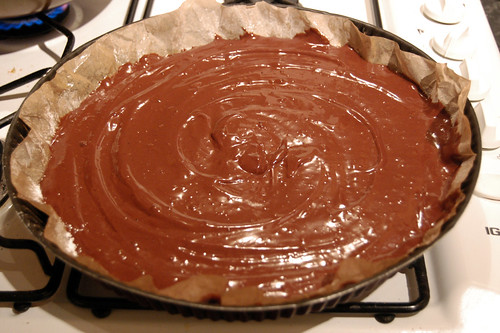
There are two types of mixtures: Homogeneous mixtures: It is a mixture that has a consistent color and texture. Every part of an homogeneous mixture has the same properties.
Homogeneous mixture Fondant au Chocolat. Photo by Ly. H via flickr
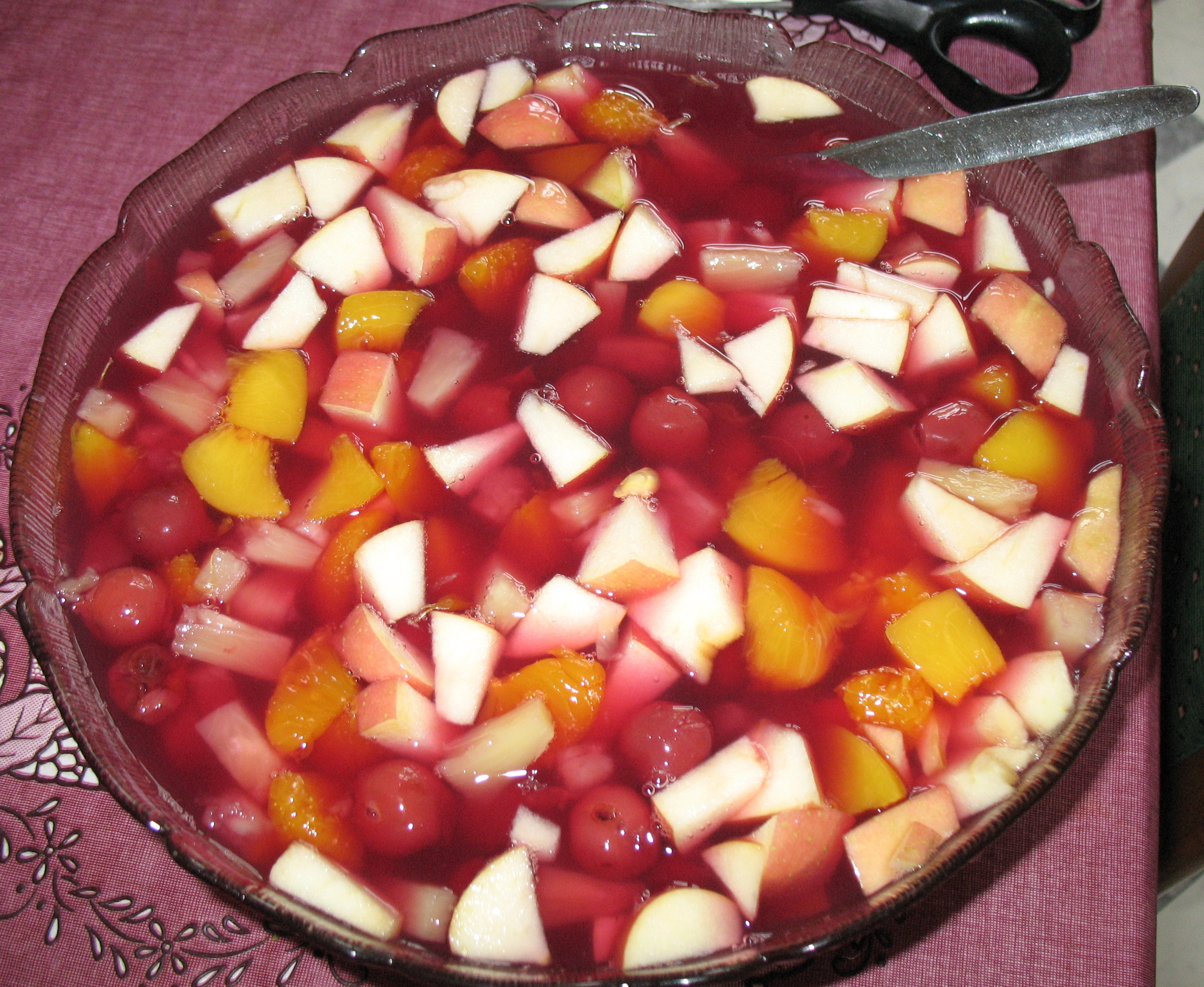
Heterogeneous mixture: It is a mixture that has a varied color or texture. Each substance in the mixture retains its specific properties.
Fruit Salad. Photo by: I, Bangin [GFDL (http://www.gnu.org/copyleft/fdl.html), CC-BY-SA-3.0 (http://creativecommons.org/licenses/by-sa/3.0/) or CC BY 2.5 (http://creativecommons.org/licenses/by/2.5)], via Wikimedia Commons
A solution is a mixture of one or more liquids, with one or more other substances. In a solution, the substances are dissolved in the liquid.
The liquid components of a solution are called solvents. The other components are called solutes.
Making a saline water solution by dissolving table salt in water. The salt is the solute and the water the solvent. Photo by Chris 73 / Wikimedia Commons [GFDL 1.3
(www.gnu.org/licenses/fdl-1.3.html) or CC BY-SA 3.0
(http://creativecommons.org/licenses/by-sa/3.0)], via Wikimedia Commons
Light is a form of energy that travels in waves.
Matter that is in a gaseous state is usually transparent: it doesn't reflect light.
Matter that is liquid usually has a smooth reflective surface.
Solid matter usually has a rougher surface than liquid, so it reflects light but they don't produce a reflection.
REFLECTION AND DIFFUSION:
When light hits a smooth surface, it's reflected regularly.
Image from https://www.orcagrowfilm.com/Articles.asp?ID=148
When light hits a rough surface, it's reflected irregularly. This is called diffusion.
The protons (positive charge +) and neutrons (neutral: no charge) make up the nucleus. The electrons (negative charge -) rotate around the nucleus in orbits. Electricity is a form of energy that's created when electrons move from the orbit of one nucleus to that of another.
When atoms lose electrons, matter becomes positively charged.
When atoms gain electrons, matter becomes negatively charged.
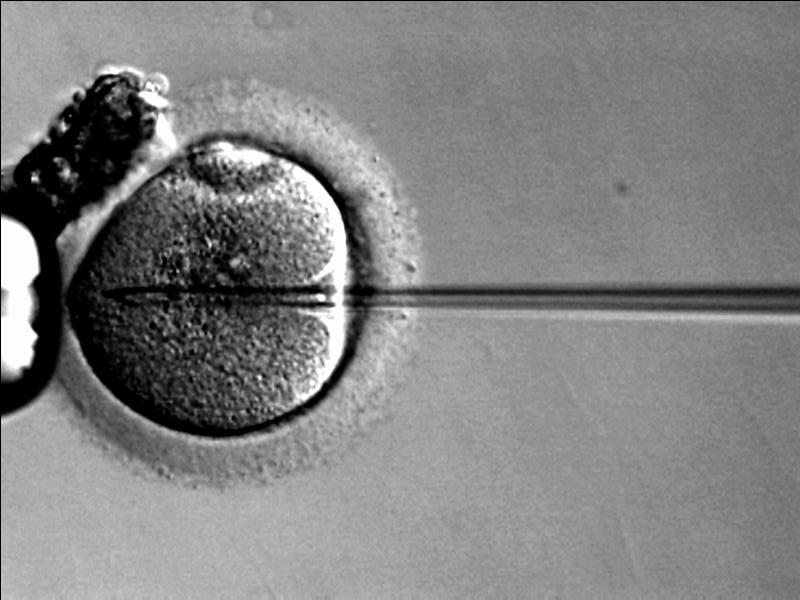
Medical advances can help at specific stages of reproduction. Fertilisation: In-vitro fertilisation is a procedure that involves joining the male and female reproductive cells outside the woman's body, in a laboratory. If fertilisation occurs, the zygote is placed inside the woman's uterus.
Birth: one of the problems which can occur during birth is the breech birth, doctors usually perform a Cesarean section. They extract the fetus through a small cut they open through the lower abdomen and the wall of the uterus, instead of through the mother's vagina.
Click on this photo to watch a video about Cesarean Section.
Pregnancy: during pregnancy specialist doctors check the mother and the fetus health. They analyse blood and urine samples to detect infections in the fetus. To detect problems (abnormalities) in the fetus, doctors analyse amniotic fluid extracted from the amniotic sac. This procedure is known as amniocentesis. They also use an ultrasound scan to check the developing organs and bones in the fetus and its growth as well.
A man and a woman have sexual intercourse. The man deposits his semen in the woman's vagina. The sperm cells swim into the uterus and up the fallopian tubes, where one of them will fertilise the female egg cell. When a sperm cell joins with an egg cell in the fallopian tube, they form
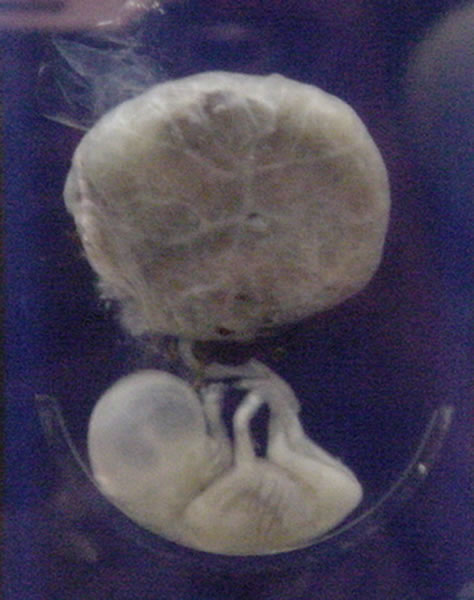
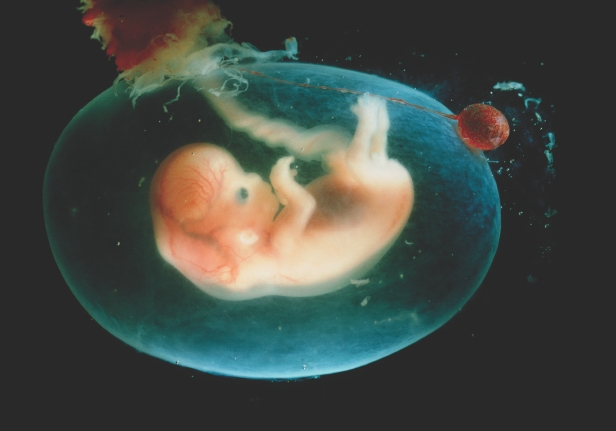
a new cell called a zygote(click here to watch a video about fertilisation).The zygote that results goes into the uterus. as it travels, it divides many times to form a group of cells called an embryo, and finally it develops into a fetus.
8 cell embryo at day 3. By ekem, Courtesy: RWJMS IVF Program [Public domain], via Wikimedia Commons.
Fetus 3 months. By National Museum of Health and Medicine [Public domain], via Wikimedia Commons.
PREGNANCY
Pregnancy is the period of time between the fertilisation of an egg cell and the birth of a baby.
The placenta provides the fetus with oxygen and nutrients from the mother's blood. It also takes away carbon dioxide and waste that the fetus produces.
The fetus is connected to the placenta by the umbilical cord.
The amniotic sac contains a liquid called amniotic fluid. This liquid supports
the fetus and protects it.
Placenta and umbilical cord. By Gray38.png: User Magnus Manske on en.wikipedia derivative work: Amada44 talk to me (Gray38.png) [Public domain, Public domain, Public domain or Public domain], via Wikimedia Commons
During birth (click on the word birth to watch a video) the walls of the uterus start to contract.
Then the cervix gets wider to enable baby to come out of the uterus. Next the
amniotic sac breaks and the contractions push the baby into the vaginal canal.
Once the baby is outside the mother's body he starts to breathe and the doctor cuts the umbilical cord. Finally the amniotic sac, the placenta and the rest of the umbilical cord are expelled.
During puberty a girl's ovaries start to release eggs. every 28 days a mature egg cell is released from one of the ovaries, it travels down a fallopian tube to the uterus. It stays here for some days waiting to be fertilised. If the egg is not fertilised it leaves the body with blood and tissue. This is called the menstrual cycle.
The female reproductive system is formed by external sex organs and internal sex organs (located inside the pelvis).
The ovaries produce egg cells. There is one ovary on each side of the uterus.
The uterus is where a fertilised egg cell develops into a fetus.
The fallopian tubes connect the ovary with the uterus. The egg cell travels along them.
The cervix is the narrow part of the uterus that leads to the vagina.
The vagina is a muscular canal that leads from the vulva (the external organ) to the uterus.
Female Reproductive System, by CDC, Mysid [Public domain], via Wikimedia Commons
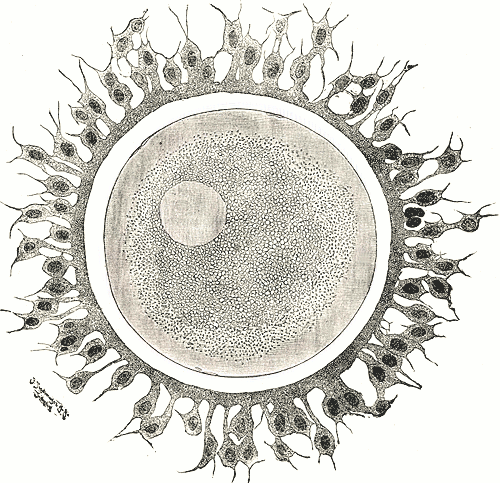
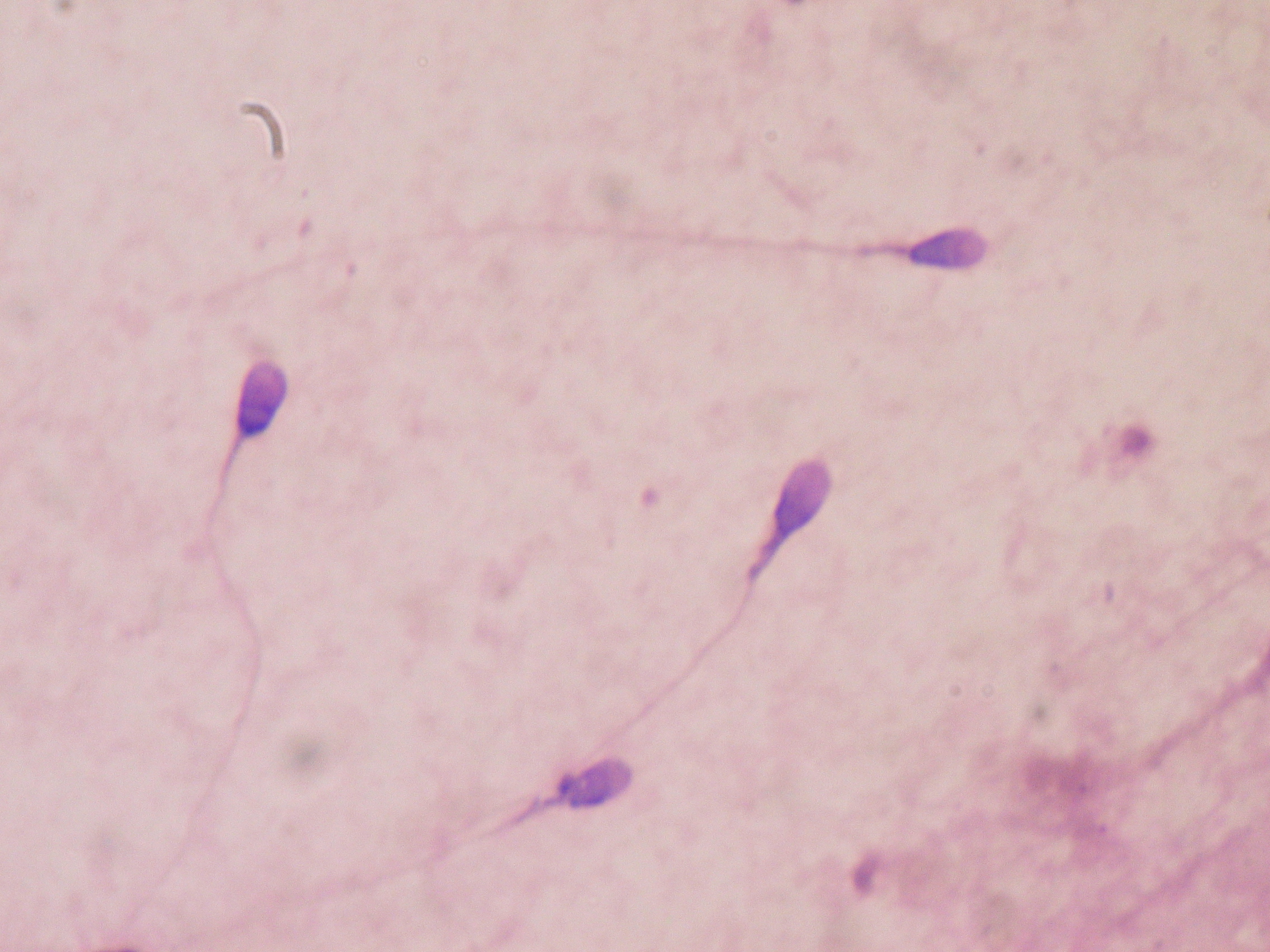
There are two types of human reproductive cells which are called gametes: the female egg cell (ovum) and the male sperm cell (spermatozoon). A female egg is round and much larger than a sperm cell. A sperm cell has a small head and a long tail which helps it to move around.
Egg cell, Henry Vandyke Carter
[Public domain], via Wikimedia Commons
Sperm cells, By Bobjgalindo (Own work) [GFDL (http://www.gnu.org/copyleft/fdl.html) or CC BY-SA 4.0-3.0-2.5-2.0-1.0 (http://creativecommons.org/licenses/by-sa/4.0-3.0-2.5-2.0-1.0)], via Wikimedia Commons
Sperm cell and egg cell fusing, via Wikipedia.
Reproduction can be sexual or asexual.
In sexual reproduction the male and the female gametes combine to produce a fetus and contains DNA from each one.
The differences between male and female bodies are called sex characteristics. Primary sex characteristics are the differences between the male and the female reproductive organs. Secondary sex characteristics aren't directly related to reproduction (facial hair...).
Red blood cells absorb oxygen in the lungs and transport it to the organs and muscles.
White blood cells fight germs and infections in our body. They attack infected cells.
Platelets help to stop bleeding. When you have a cut that's bleeding, platelets stick to the edges of the cut and to each other. In this way, they cover the cut and form a scab, and this stops the bleeding.
The blood vessels are tubes that connect the heart to the rest of the body.
There are three types of blood vessels: arteries, veins and capillaries.
Arteries are large blood vessels that carry blood from your heart to the rest of your body. This blood is rich in oxygen and nutrients. As arteries get farther away from the heart they begin to branch and become smaller and smaller. The smallest branches are called capillaries.
Capillaries: this is where the oxygen of your blood is transferred to your tissues. In exchange, the wastes from your cells are transferred to the blood, including the carbon dioxide. Just beyond this area the capillaries begin to merge together and eventually form larger vessels called veins.
Veins lead back to the heart. As the vessels carry deoxygenated blood back to the heart, waste products are routed to other organs where they are removed.
The nutrients we eat and the oxygen we breathe are transported to our organs, bones, brain and muscles by the circulatory system.
The heart is an organ that acts like a pump.
It is divided into four chambers: the two upper are called the atria and the two lower are called ventricles.
When blood enters the heart, it's then pumped to the lungs. In the lungs, the red blood cells absorb oxygen. That oxygenated blood is pumped back into the heart. The heart then pumps the oxygenated blood around the body.
You can see it in this video:
The oxygen that we breathe passes into our blood, where it's transported to our muscles.
Our muscles absorb oxygen and expel carbon doxide.
There is an exchange of carbon dioxide for oxygen betwee the blood, and the alveoli.
Then we expel this gas as we breathe out.
Mouth and nose: air enters the body through the mouth and nose.
Vocal cords: as air passes our vocal cords, they vibrate and enable us to speak.
Trachea: this long, rigid tube connects our mouth and nose to our two bronchi. Air travels down the trachea into the bronchi.
Bronchi: these two smaller tubes connect the trachea to the lungs.
Lungs: these two large bags are connected to the bronchi. The bronchi branch into millions of smaller tubes, or bronchioles, here in the lungs.
Bronchioles: these are small tubes inside the lungs. At the end of each bronchiole, there are tiny sacs called alveoli. The air we breathe in goes into these tiny sacs and then passes into blood vessels which surround them.